
Events are no longer just gatherings—they are opportunities for brands to create immersive experiences that leave lasting impressions. From exhibitions and product launches to corporate events and experiential spaces, thoughtful event design plays a major role in how audiences perceive a brand.
Visual storytelling is at the heart of every successful event experience. Every stage element, lighting decision, spatial layout, and graphic detail contributes to a larger narrative. The environment should not only look visually impressive but also communicate the brand’s message clearly and emotionally.
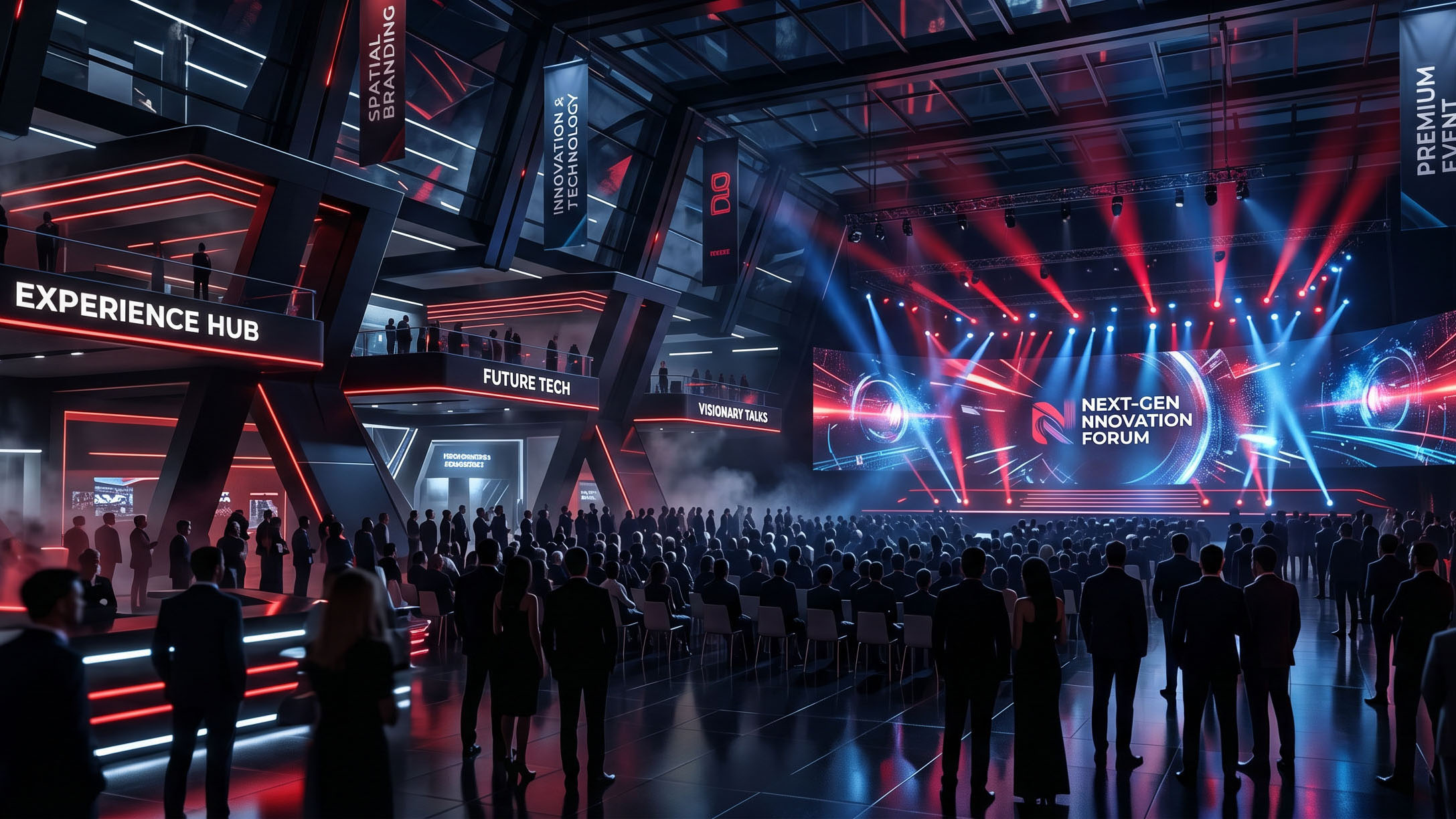
A successful event design balances creativity with functionality. Visitors should feel engaged, guided, and connected to the experience naturally. Strategic use of visuals, movement, textures, and space can transform ordinary environments into memorable brand moments.
Modern event experience design also focuses heavily on interaction. Audiences today expect experiences they can participate in, photograph, and share digitally. This means event visuals must work both physically and socially, creating impact beyond the venue itself.
The most effective event experiences are those that align seamlessly with the brand identity. Consistency between digital campaigns, physical spaces, and brand messaging creates stronger recognition and deeper audience engagement.
Ultimately, great event design is about creating moments people remember—not just visually, but emotionally.
Every space has a story. My job is to make people feel it before a single word is spoken.
Titash Sarma – quote